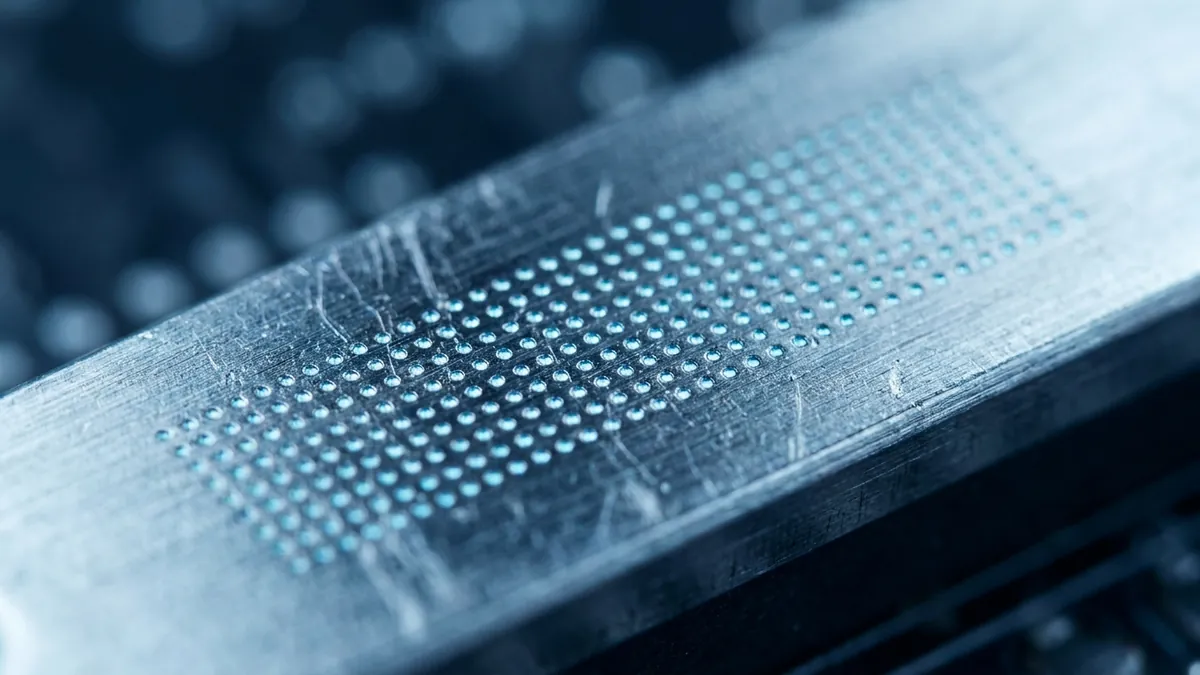
A print-and-apply machine can run for a decade. The print head inside it will not. Thermal and thermal-transfer print heads are consumables with a service life measured in kilometres of print, not years of ownership, and the operations that avoid surprise downtime are the ones that plan thermal print head replacement as a scheduled cost rather than treating it as a fault when it finally wears out.
Why the head wears when the machine does not
A thermal-transfer head prints by heating thousands of tiny resistive elements in a row, each one melting ribbon onto the label as the web passes underneath at speed. Those elements are physically in contact with moving media on every millimetre of every label. Two things degrade them over time: thermal cycling, which fatigues the elements, and abrasion, as ribbon and label stock scrub across the head surface. Neither is a defect. It is the head doing exactly its job, and the job consumes it.
That is why a machine can carry a one-year warranty while its print head carries a separate, shorter one, sometimes as little as three months or 30 km of print travel. The two are not the same asset, and pretending they are is what leads to a head failing unexpectedly in the middle of a shipping window.
What shortens head life fastest
Print head lifespan is not fixed; how the head is run and maintained moves it substantially. The main accelerators are avoidable:
- Excess darkness. Running the head hotter than the ribbon needs to make a readable print fatigues elements faster. Print at the lowest energy that still passes verification.
- Poor ribbon-to-label match. A ribbon too narrow for the label lets the head scrub bare label stock; the wrong ribbon grade for the substrate needs more heat.
- Abrasive or dirty media. Grit, dust, and abrasive top-coats wear the head like sandpaper. A clean web path matters.
- Skipped cleaning. Residue builds on the head, which shows up as voids in barcodes and pushes operators to raise darkness, accelerating wear further.
Read the failure before it strips a run
A print head rarely dies all at once. It warns first, and reading those warnings converts an emergency into a planned swap. Thin white lines running in the direction of travel usually mean a burned-out element; they will fail barcode verification long before the head is unusable, so a line with in-line scan checks catches them automatically. Gradually lighter print at the same settings, or needing more darkness to hit the same result, signals a head nearing end of life. Both are cues to schedule the replacement for the next planned stop rather than waiting for a dead element to reject a full pallet of labels.
Build the cadence into the maintenance plan
Because head life tracks print distance, the sensible unit for a print and apply maintenance schedule is kilometres or label count, not the calendar. A head rated around 30 km on a line printing around 2,000 metres per shift reaches that mark in a matter of weeks, so you can stock a spare before it is needed and swap it during scheduled maintenance. A modern head is a field-replaceable part, changed in minutes with a few connectors and a locating pin, so the replacement itself is not the problem. The unplanned timing is.
The consumable side of a labeling line, heads, ribbons, and label stock, is worth treating as a managed inventory rather than an afterthought, which is why we cover them alongside the machines in our consumables and materials. A spare head on the shelf turns a head failure into a ten-minute stop. No spare head turns it into a lost shift and an expedited order.
The mechanical machine and the print head age on completely different clocks. Budget for both. The operations that never seem to lose a shift to a dead head are simply the ones that decided, in advance, that the head was a consumable and planned its replacement like any other.