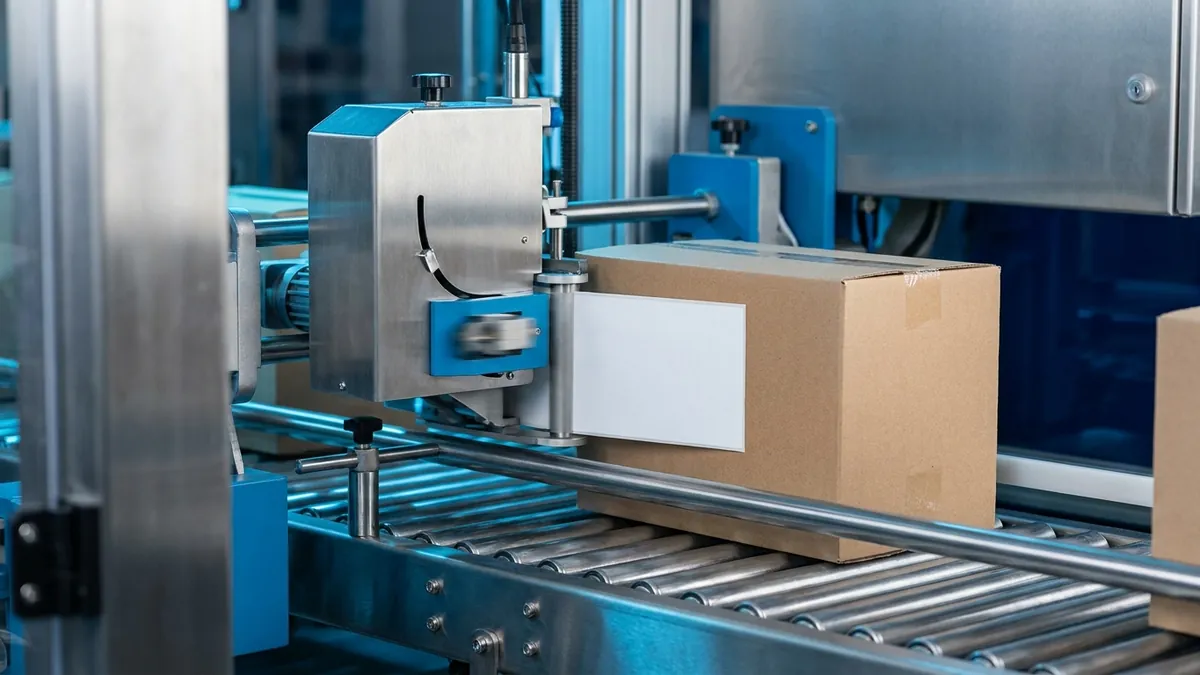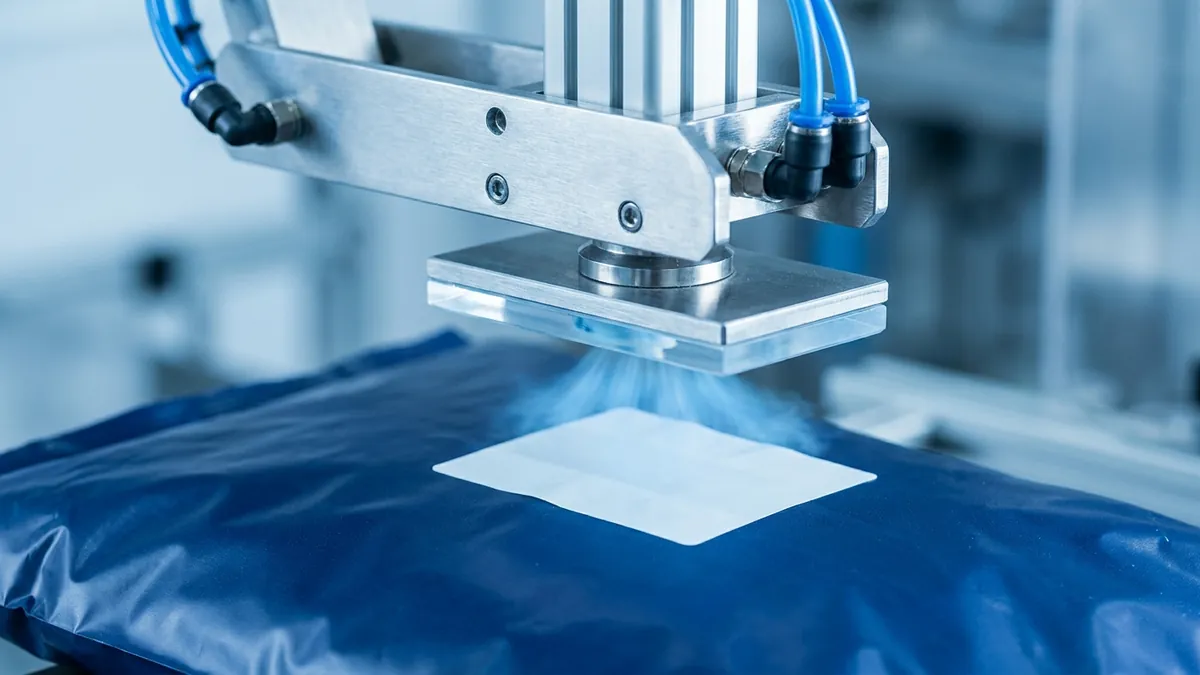
The expensive default in labeling is buying a whole new machine every time a product changes shape. A new pack that needs a label on its corner instead of its top, or on a curved side instead of a flat face, arrives and the answer is another capital purchase. It rarely has to be, because the part that needs to change is the applicator arm, not the print engine behind it.
The printer and the arm do different jobs
A print-and-apply station is really two machines bolted together. The print engine turns label stock and ribbon into a printed label at a set resolution, commonly 203, 300, or 600 dpi, and it does not care what shape the product is. The applicator arm takes that printed label and puts it on the product, and it cares about nothing else. Cycle speed, placement accuracy, and which surfaces are reachable are all decided by the arm.
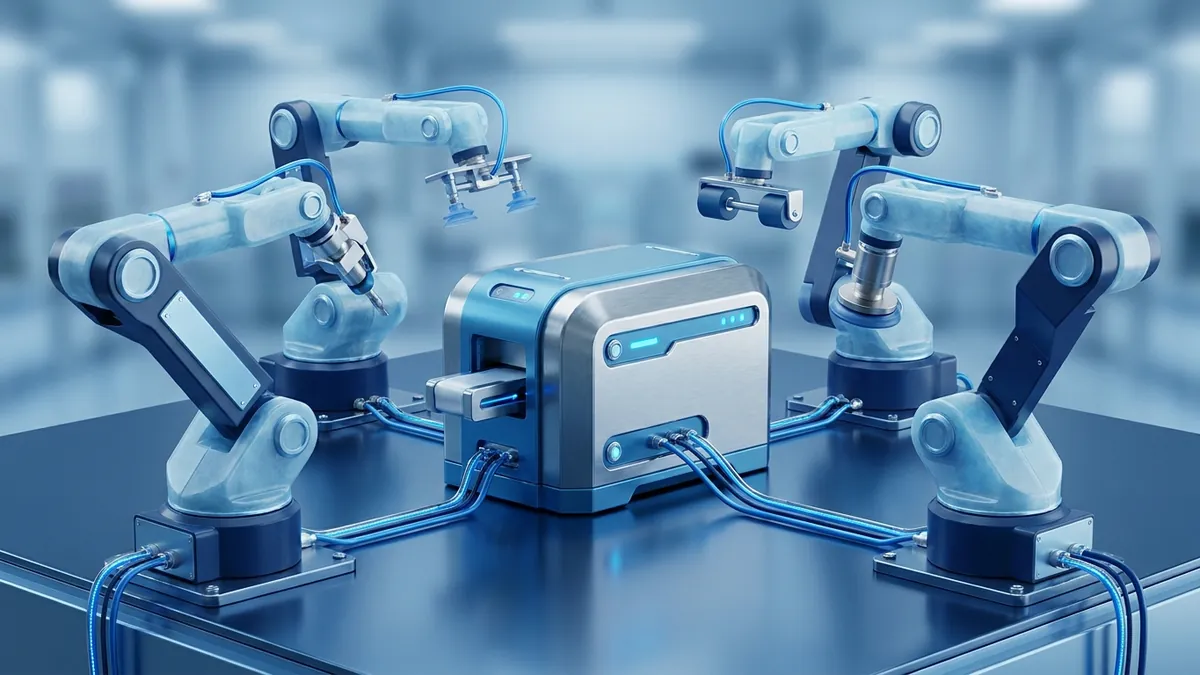
Once you see the station that way, a modular label applicator system becomes the obvious architecture: keep one print engine and change only the arm when the product geometry changes.
What a swappable-arm architecture actually buys
The saving is not only the avoided cost of a second printer. It is everything that comes with keeping one host:
- One set of print settings, one label-design workflow, and one interface for operators to learn instead of several.
- One spare-parts inventory for the print side, since the engine, ribbon path, and print head are shared across every product.
- A single integration point to the line, so upstream sensors and control systems talk to one device.
The arms themselves cover the geometry. A tamp arm handles flat and gently uneven tops. A wipe arm rolls labels onto curved or continuously moving surfaces. A blow arm applies to fragile packs without contact. A corner arm wraps a two-panel label around an edge in one stroke. A swing arm reaches front, back, or side positions without repositioning the product. Changing product families becomes an arm change, not a purchase order.
Changeover is where the theory gets tested
A modular design only pays off if swapping the arm is genuinely quick. Print and apply arm changeover should be a mechanical operation measured in minutes: unbolt or unclamp the arm from the mounting interface, seat the replacement, and load its motion profile from the controller. If an arm change means rewiring, re-teaching the whole cycle from scratch, or calling a technician, the modularity is on paper only.
Two details make or break it. First, a common mechanical and electrical interface so any arm mates to the same host without adapters. Second, stored motion profiles per arm on the controller, so the machine already knows the stroke, dwell, and timing for the arm you just fitted. Get those right and a flexible labeling line can run a corner-labeled carton in the morning and a curved bottle in the afternoon on the same host.
When one arm is genuinely enough
Modularity is not free, and a line that will only ever label one flat product does not need it. The architecture earns its place when product mix is real: several pack shapes now, or a clear expectation that new formats are coming. In those cases the swappable arm is insurance against the capital-repeat trap, because the next odd product shape costs an arm, not a machine.
Our print-and-apply labeling range is built on that shared-host principle, so the print engine stays put and the arm follows the product. The question to ask a vendor is simple: when my product changes shape, what exactly do I replace? If the honest answer is the whole machine, the architecture is working against you.
A print engine is a stable, long-lived asset. Product shapes are not; they change with every new SKU and every packaging redesign. Building the line so the stable part stays and only the variable part moves is what keeps labeling from becoming a recurring capital line item.