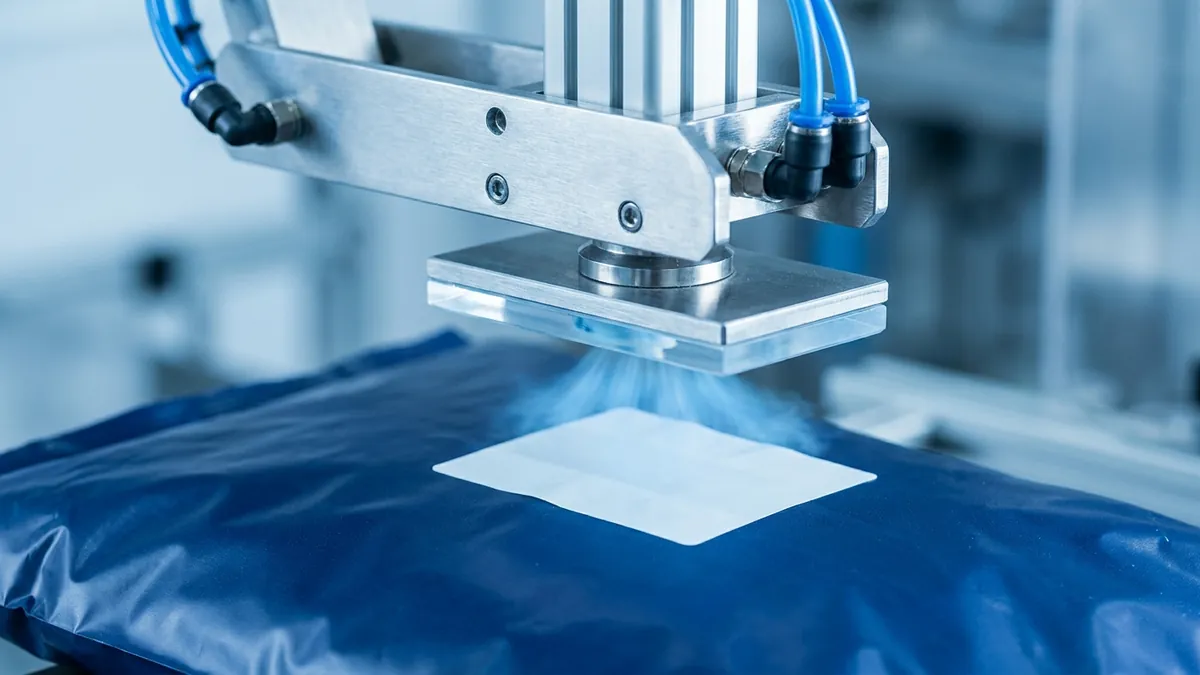
A print-and-apply machine will label a standard 100 by 150 mm shipping label without complaint, then misbehave on a very small label, a very long one, or an unusual material. The spec sheet said the label width was in range, so the failure feels like a defect. Usually it is not a defect. It is firmware that offers one feed profile for every job, and the edges of the size range are where a single profile falls apart.
Width rating is not the same as feed control
Label-width capacity is a mechanical envelope: the machine can physically handle stock from, say, 8 to 168 mm wide. That number tells you nothing about whether the feed stays stable at the extremes. Feeding a 12 mm label and a 160 mm label are different dynamic problems. The narrow one has little web to grip and can wander; the wide, long one has more mass and inertia and wants to overshoot. A rating on paper does not solve either. What solves them is label winding tension control and adjustable feed timing.
Winding delay and winding frequency
Two parameters do most of the work, and machines with over-cured, locked firmware hide them. The first is winding delay, the timing between when the printer finishes a label and when the take-up reel pulls the liner. Set it wrong for an unusual size and the label either peels too early, before it is presented, or too late, so it drags. The second is winding frequency or the tension applied on the rewind, which keeps the liner taut without stretching a thin stock or tearing at a perforation.
On a standard label these sit at factory defaults and nobody notices. On an odd size they need to move. A machine that lets an operator adjust winding delay and rewind tension can be tuned to a strange label in minutes. A machine that buries those values behind a fixed profile leaves you with print and apply label feed problems that no amount of restarting will fix.
Material, not just size, changes the tuning
Size is the obvious variable, but material is often the real culprit. A stiff synthetic label behaves differently at the peel edge than a thin paper one; a strongly tacky adhesive resists separation from the liner more than a light one; a clear film label has less rigidity to carry itself across the peel point. Each of these shifts the correct winding delay and tension. Thermal transfer printer settings interact here too, because print speed and darkness affect how the ribbon releases and how the label sits as it advances.
- Small or narrow labels: reduce feed speed and tune delay so the short web does not wander before it is gripped.
- Long or heavy labels: control rewind tension and delay to stop overshoot at the peel edge.
- Stiff or clear films: adjust the peel timing so a less-flexible label separates cleanly rather than lifting the liner with it.
- Highly tacky stock: manage tension so the adhesive releases at the peel point without snapping back.
The right question to ask a vendor
When evaluating a print-and-apply machine for anything beyond one standard label, the useful question is not "what is the maximum label width." It is "which feed parameters can I adjust, and can I store a profile per label." A machine that exposes winding delay, rewind tension, and peel timing, and remembers them per job, will handle the awkward stock the day it arrives. A machine that only advertises a wide width rating will look identical on the spec sheet and fail on the floor.
Odd label sizes are not really an edge case; most lines pick up an unusual format eventually, whether a promotional pack, a small-component label, or a new export format. The difference between a machine that adapts and one that does not is almost never the print head. It is whether the feed system was built to be tuned, or built to run exactly one label and no other.
The spec sheet describes what the machine can hold. The firmware describes what it can actually run well. On odd sizes, only the second one matters, and it is the number no glossy datasheet prints.