
Packaging-line engineering, in depth
Technical notes on coding, labelling and end-of-line machinery — pain points, components and what to look for.

CIJ, TIJ, or TTO: Matching Coding Technology to Your Substrate
A procurement comparison of continuous inkjet, thermal inkjet, and thermal transfer overprinting on resolution, speed, and consumable cost.

Ink That Will Not Dry, or Dries Too Fast: Solving Adhesion in Variable-Data Coding
Ink chemistry and substrate surface energy decide whether a date or lot code survives handling. What to check before blaming the machine.

GS1 Barcodes and Lot Codes: What Exporters Actually Need for Traceability
A plain-language guide to GS1-128, GTIN, and date/lot coding, and how food and pharma traceability rules become real line requirements.

Sensors That Save a Packaging Line: Why Redundant Detection Beats a Single Photocell
Photoelectric, pressure, and contact sensors each catch a different failure; relying on one is how occasional errors become a pattern.
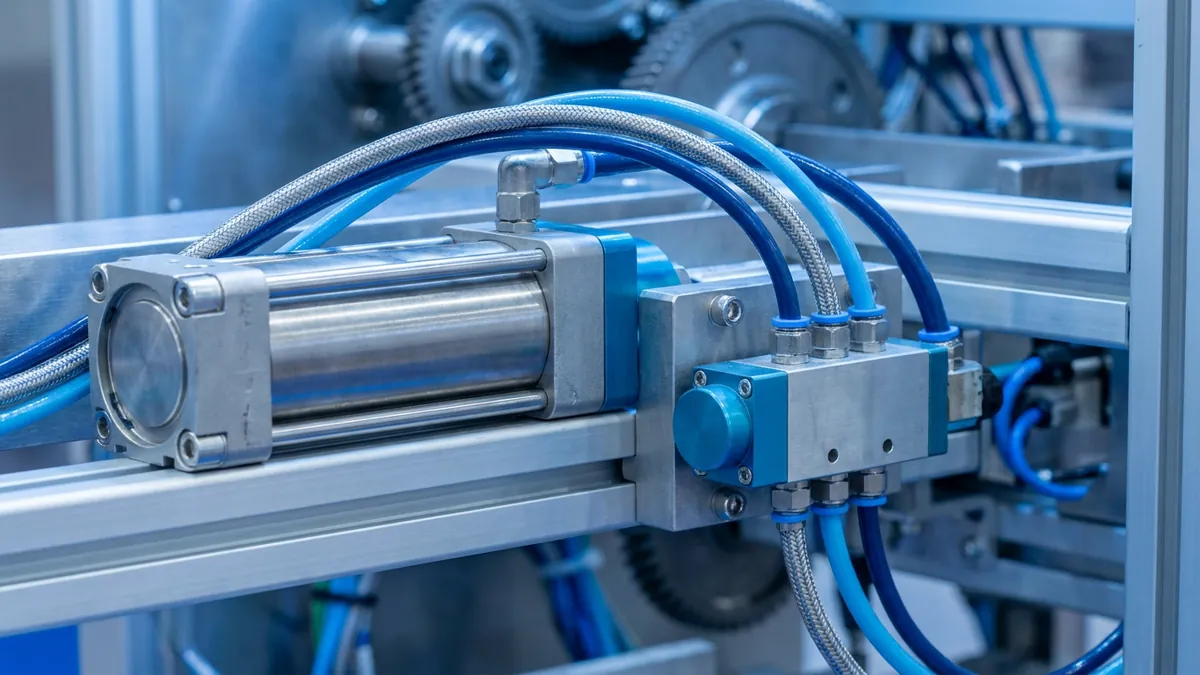
Inside the Pneumatic Cylinder: How Air Pressure Drives Packaging Speed
Cylinder bore, air pressure, and valve response time set the cycle-speed ceiling across tamp applicators, case sealers, and strapping heads.

PLC and HMI: The Unglamorous Reason Some Packaging Lines Never Go Down
Control architecture, not the mechanical actuator, is what keeps a line running for years: fast PLC cycles, clear HMI, clean I/O.

Pallet Wrapping Downtime: Film Breaks, Pre-Stretch, and What's Really Causing Them
Film-break frequency ties back to pre-stretch ratio, turntable wear, and film mismatches, with the load-containment trade-off laid out.

Case Sealing Is Not One-Size-Fits-All: Tape Heads, Hot Melt, and Carton Variability
Fixed-position tape heads and hot-melt systems fail on mixed-carton lines. What adjustable and random-case sealing actually requires.

Strapping Tension Done Right: Protecting the Product Without Losing Load Stability
The tug-of-war between crushing product and letting loads shift, and how servo-driven tension narrows the gap versus fixed heads.