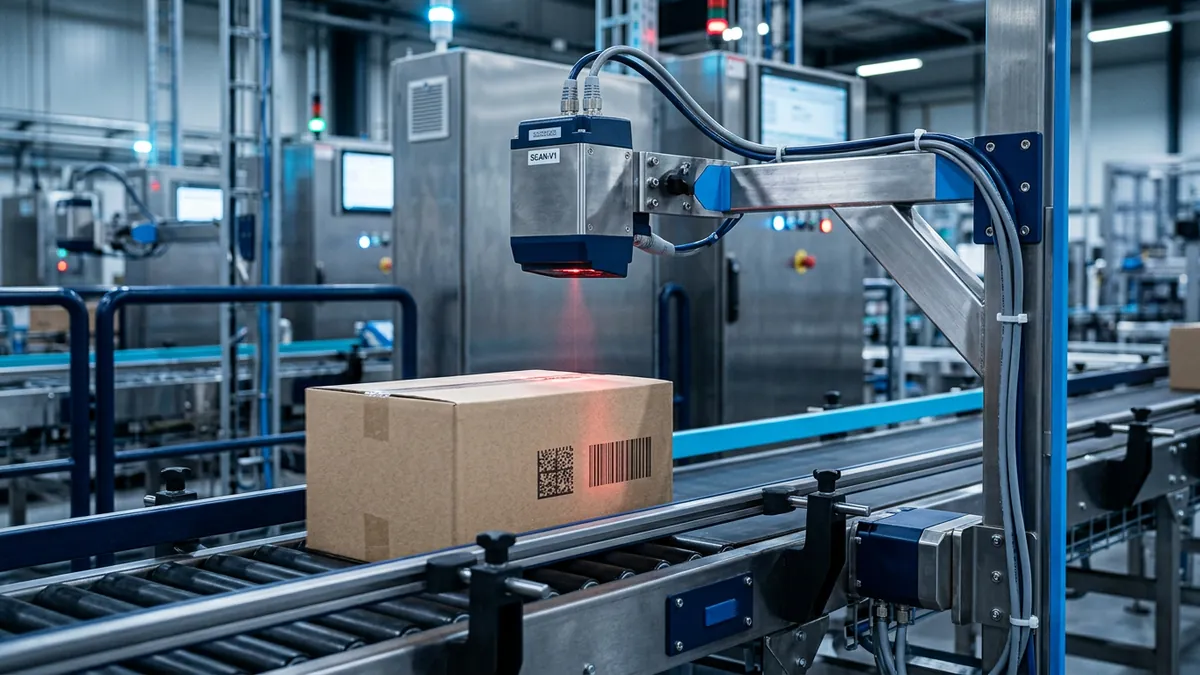
A date code that wipes off with a thumb, or one that clogs the nozzle because it dried before it left the head, sends most people straight to the machine settings. The machine is usually innocent. Ink adhesion in packaging coding is governed by chemistry, specifically the match between the ink and the surface it lands on, and no setting change fixes a fundamental mismatch there.
Surface energy decides whether ink wets out
For ink to adhere, it has to wet the surface, spreading into contact rather than beading up. Whether it does is set by surface energy. A high-surface-energy material such as treated paper or glass lets ink spread and grip. A low-surface-energy plastic, untreated polyethylene or polypropylene, repels it, so the ink pulls into droplets and the code looks broken and rubs off easily. This is why the identical ink prints a durable code on a carton and a fragile one on a poly bag. The ink did not change; the surface did.
Many films are surface-treated, by corona or flame, to raise their surface energy before printing. When adhesion suddenly fails on a film that used to code fine, a lapsed or inconsistent surface treatment upstream is a prime suspect, and it is entirely outside the coder.
Dry time is a balance, not a maximum
Ink has to dry fast enough to resist the next handling contact but not so fast that it dries in the print head. Industrial ink drying time is tuned by solvent chemistry, and the two failure modes sit at opposite ends. Too slow, and the code smears at the next roller or when it is packed. Too fast, especially with volatile solvents in a warm environment, and the ink skins over in the nozzle, causing misfires and clogging. The right ink is matched to both the substrate and the line's speed and temperature, not just to the pack.
- Code smears after printing: dry time too slow for the line, or solvent wrong for the substrate.
- Nozzle clogs, intermittent drops: ink drying too fast, or a warm/dry ambient accelerating it.
- Code beads and rubs off: low surface energy substrate, or missing surface treatment.
- Adhesion varies by batch: inconsistent film treatment upstream, or contamination on the surface.
Variable data raises the stakes
When the code is fixed, you tune once and forget it. Variable data printing substrate work is harder because the content changes constantly, dates, lot numbers, serial codes, and often the packaging changes with the product too. A coding setup that must run several substrates through the shift cannot rely on one ink being perfect for all of them. This is where surface energy and ink selection have to be planned across the whole product range, choosing an ink chemistry that covers the substrates in play rather than optimizing for one and rejecting on the others.
Check chemistry before mechanics
When adhesion fails, a short sequence saves hours of pointless machine tinkering. Confirm the substrate and its surface treatment first, because a low-energy or untreated surface will defeat any coder. Verify the ink is the correct grade for that substrate and is within its usable life. Check the ambient temperature and airflow, since both shift effective dry time. Only after those are ruled out is it worth adjusting the machine, and by then the real fix is usually obvious.
Because adhesion is a substrate-and-ink problem, the durable answer is matching the marking system and its consumables to the packaging, which is how we approach the coding and marking side of a line. A coder forced onto a substrate its ink cannot grip will fail on schedule, tuned or not.
Adhesion is chemistry meeting a surface. Get the pairing right, ink to substrate, dry time to line, and the code survives handling without heroics. Get it wrong and every dial on the machine is just a slower way to discover the pairing was the problem all along.