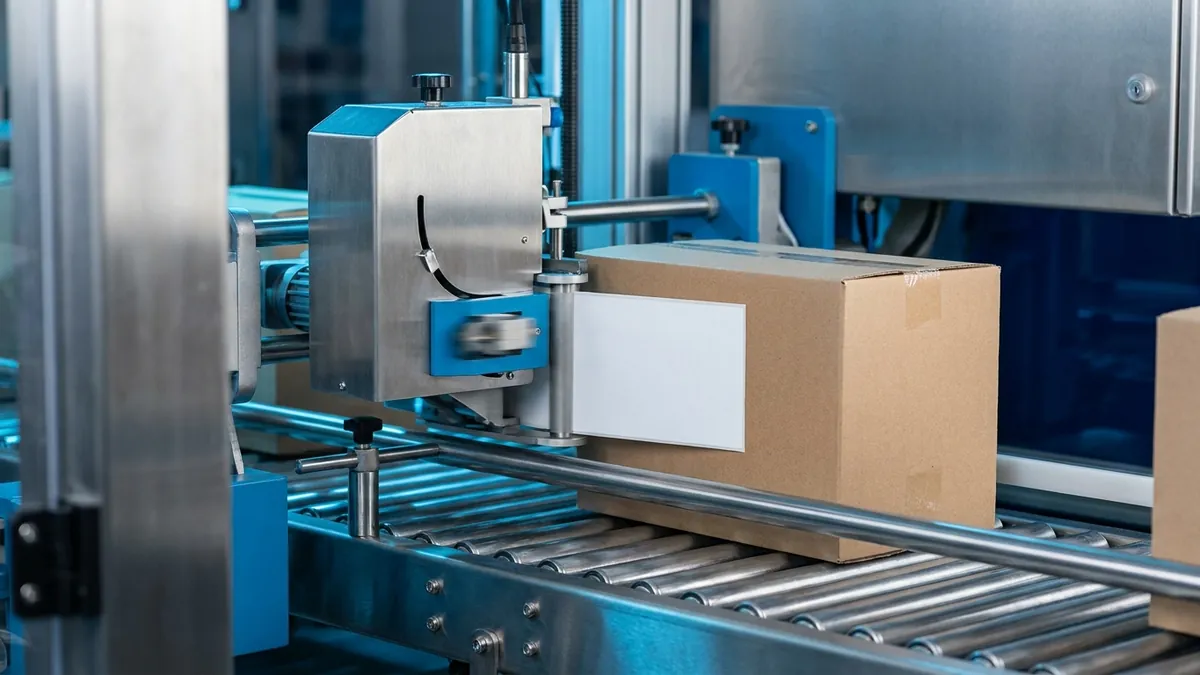
An induction cap sealer passes the capped bottle under a coil that heats the foil liner so it bonds to the bottle neck. The single most important specification is the seal diameter range, because it has to cover every cap you run — energy delivered outside the foil does nothing.
What induction sealing does and does not do
The coil induces current in the foil liner inside the cap. The liner heats, the polymer layer melts and bonds to the neck rim, and the cap can then be removed leaving a sealed membrane. It works on non-metallic bottlenecks — plastic and glass — with a threaded flat cap. It does not work on metal caps, non-threaded press caps, or caps with an active handle.
Specification checklist
| Specification | Why it matters |
|---|---|
| Seal diameter range | Must cover every cap diameter you run |
| Cap material | Metal caps and press caps are outside the process |
| Cap-to-neck spacing | Excess spacing after screwing down prevents a bond |
| Line speed vs power | Higher speed needs more power for the same bond |
| Conveyor height | Head-to-cap distance must be consistent across the run |
Across the 25 coding, marking and sealing accessory series we list, induction units are published with their seal diameter range on each page — that is the number to compare first.
Why a seal fails after the line runs for an hour
Intermittent induction failures are usually thermal, not electrical. As the head warms through a long run, the effective energy delivered changes. Machines with overheating and overcurrent indication give the operator a signal before the failures reach the customer, which is why those indicators appear on the panel.
See the sealing range for induction and capping series.
Figures in this article are drawn from the 137 machine series SilverSeal currently supplies, not from generic industry averages. Specifications vary by model — check the individual series page before specifying.
Frequently asked questions
Can I induction seal a metal cap?
No. The process relies on inducing current in a foil liner inside a non-metallic cap. Metal caps are outside the process.
What cap diameters can one machine cover?
Each series publishes a seal diameter range. If your caps span more than one range, you either change the head or run two machines.
Does bottle material matter?
The bottleneck must be non-metallic — plastic or glass. The liner and the neck finish matter more than the bottle body.